



управление натяжением рулона
/In modern steel rolling, the automatic gauge control system has become a critical solution for precision and efficiency. This system monitors and adjusts strip thickness in real time, ensuring that every batch of production meets the required standards. For industries producing automotive steel, construction steel, or high-grade sheet materials, this precision is non-negotiable. Without such a system, thickness variations can lead to serious product rejections, loss of materials, and higher customer complaints. One of the main reasons companies adopt automatic gauge control is cost savings. By reducing scrap, optimizing raw material usage, and minimizing rework, businesses can improve profit margins significantly. Another benefit is reputation—manufacturers who consistently deliver high-quality products gain customer trust, which leads to repeat contracts and long-term partnerships. Take for example a large steel producer in Southeast Asia that integrated an advanced automatic gauge control system into its rolling mill. Within a year, it reduced production waste by 12% and increased customer satisfaction ratings, allowing the company to expand exports to new markets. This case highlights the practical value of implementing modern control systems. YangWang LiXin has been providing automatic gauge control solutions that meet international benchmarks. Their systems are known for reliability, user-friendly operation, and easy integration into existing production lines. With digital innovations and continuous R&D, YangWang LiXin ensures that clients remain competitive in an industry that demands precision. Precision Control With AGC Controller The agc controller is the brain of modern rolling mills. It automatically adjusts rolling force and tension to maintain consistent thickness, even under variable conditions such as temperature fluctuations or changes in material hardness. Unlike manual methods, which are prone to human error, AGC controllers ensure reliability and repeatability across every production cycle. The benefits go beyond accuracy. A good AGC controller reduces downtime by detecting deviations instantly and correcting them before they lead to breakdowns. It also helps save on labor costs since operators can focus on monitoring rather than constant manual adjustments. For high-volume steel mills, this translates into faster production rates and significant annual savings. For example, a mid-sized plant in Eastern Europe adopted a modern AGC controller to replace its outdated system. Within six months, the plant reported a 20% improvement in throughput and reduced maintenance costs. Customers began noticing improved product quality, which resulted in new supply contracts from automotive manufacturers. YangWang LiXin designs AGC controllers that are adaptable to different rolling mill types, whether cold or hot rolling. They focus on ease of installation, intuitive interfaces, and compatibility with other automation technologies. This makes them a go-to choice for plants that want precision without unnecessary complexity. Benefits Of Hydraulic Automatic Gauge Control For industries seeking faster response times, the hydraulic automatic gauge control system is an advanced solution. Unlike purely electronic systems, hydraulic AGC uses fluid actuators that respond almost instantly to rolling pressure changes. This makes it ideal for applications requiring ultra-thin strip rolling or products where high uniformity is essential. Hydraulic systems are widely used in aluminum foil rolling, stainless steel sheets, and specialty alloys. They allow rolling mills to achieve consistent results even when dealing with challenging materials. Hydraulic AGC reduces vibration, improves surface finish, and increases the service life of equipment. One leading aluminum producer in India reported that after installing hydraulic AGC, their defect rate dropped by 15%, and energy consumption decreased by 8%. These improvements gave them a competitive advantage in both domestic and international markets. YangWang LiXin provides hydraulic AGC solutions tailored to client needs. Their systems are durable, energy-efficient, and built for long-term performance. Customers value their support services, which include installation, training, and after-sales maintenance. For businesses aiming to improve their bottom line, hydraulic AGC is a proven investment. Improving Efficiency With Automatic Pressure Control Rolling operations depend heavily on stable pressure. An automatic pressure control system ensures that rolling force is balanced, reducing stress on equipment and minimizing irregularities. This is particularly valuable in large-scale production, where even small pressure inconsistencies can cause serious defects over time. Automatic pressure control systems not only improve product quality but also extend the lifespan of expensive rolling machinery. They minimize sudden shocks, prevent uneven wear, and create a more balanced production process. By doing so, companies save money on repairs and reduce downtime. For instance, a rebar producer in South America installed automatic pressure control to stabilize its rolling mill operations. The result was fewer unexpected stoppages, smoother rolling cycles, and better energy efficiency. This allowed the company to expand production while keeping costs under control. YangWang LiXin offers advanced automatic pressure control systems designed for both new and existing rolling lines. Their technology is adaptable, meaning plants don’t need to overhaul entire systems to benefit from upgrades. This makes it a practical and cost-effective choice for businesses looking to modernize step by step. Tension Control FAQs What is the main function of an automatic gauge control system? It ensures precise strip thickness, reduces scrap, and improves quality in rolling operations. How does an agc controller improve rolling mill efficiency? It automatically regulates rolling parameters, reduces human error, and boosts production consistency. Why should industries invest in hydraulic automatic gauge control? Hydraulic AGC offers faster response, better uniformity, and reduced defects in thin strip rolling. What are the advantages of automatic pressure control? It stabilizes rolling force, lowers equipment wear, and improves energy efficiency in large-scale production. Why is tension control important in rolling mills? It prevents strip breakage, ensures uniform coil winding, and maintains consistent product quality.

We have successfully executed over 500
projects around the world,
many first-of-their-kind
research projects and products in China, including
We have successfully executed over 500
projects around the world,
many first-of-their-kind
research projects and products in China, including
-
2004
The 1st hydraulic AGC system for hot rolling of ribbon steel
-
2006
The 1st AFC system used for 1450mm skin pass mill
-
2009
The 1st 5-stand tandem line with 2-stand POR & Uncoiler for 650mm ribbon steel
-
2012
The 1st reversing mill for 1380mm strip
-
2016
The 1st soft-rolling system used in skin pass mill
-
2019
The 1st fully automated medium-width tandem cold rolling mill
-
2021
The 1st 5000KN Twin-stand double skin pass mill
-
2022
The 1st coupled pickling line & tandem cold mill with two modes - big roller & small roller
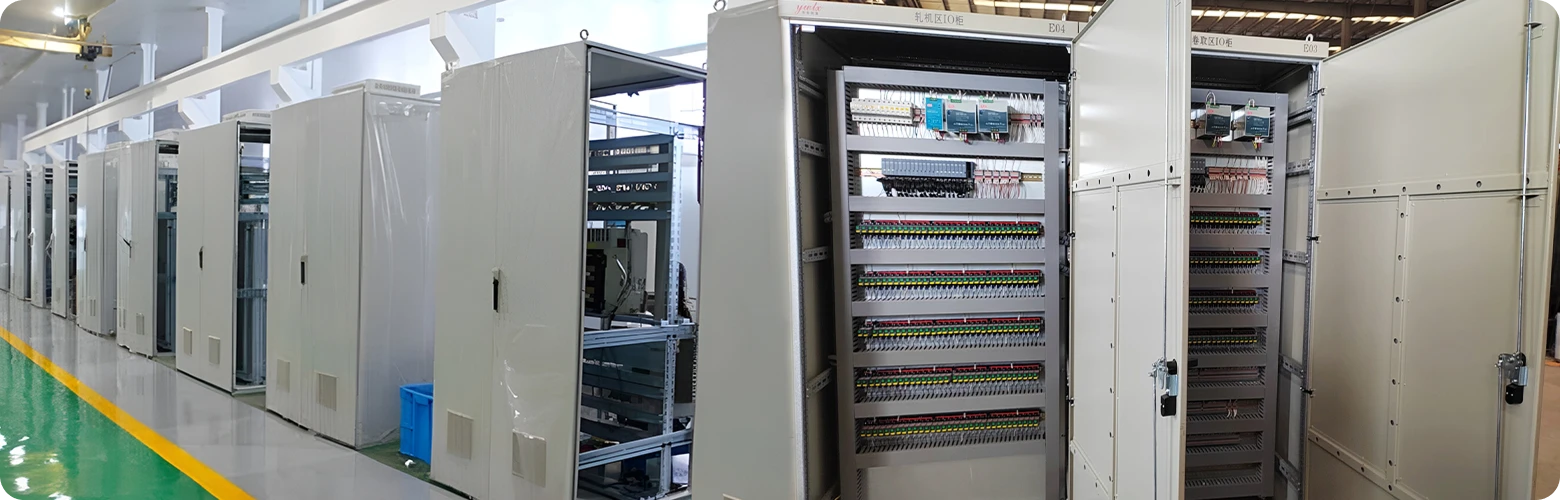
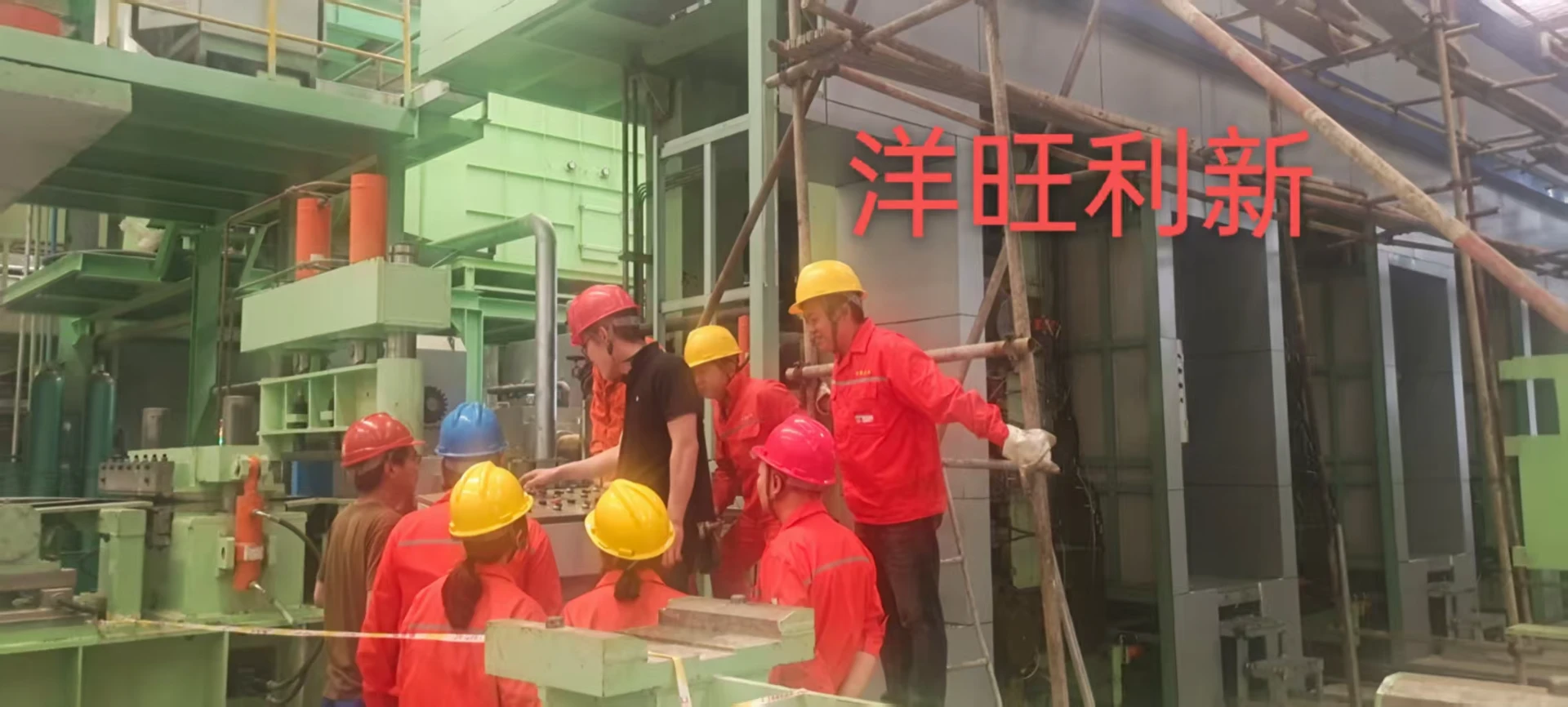

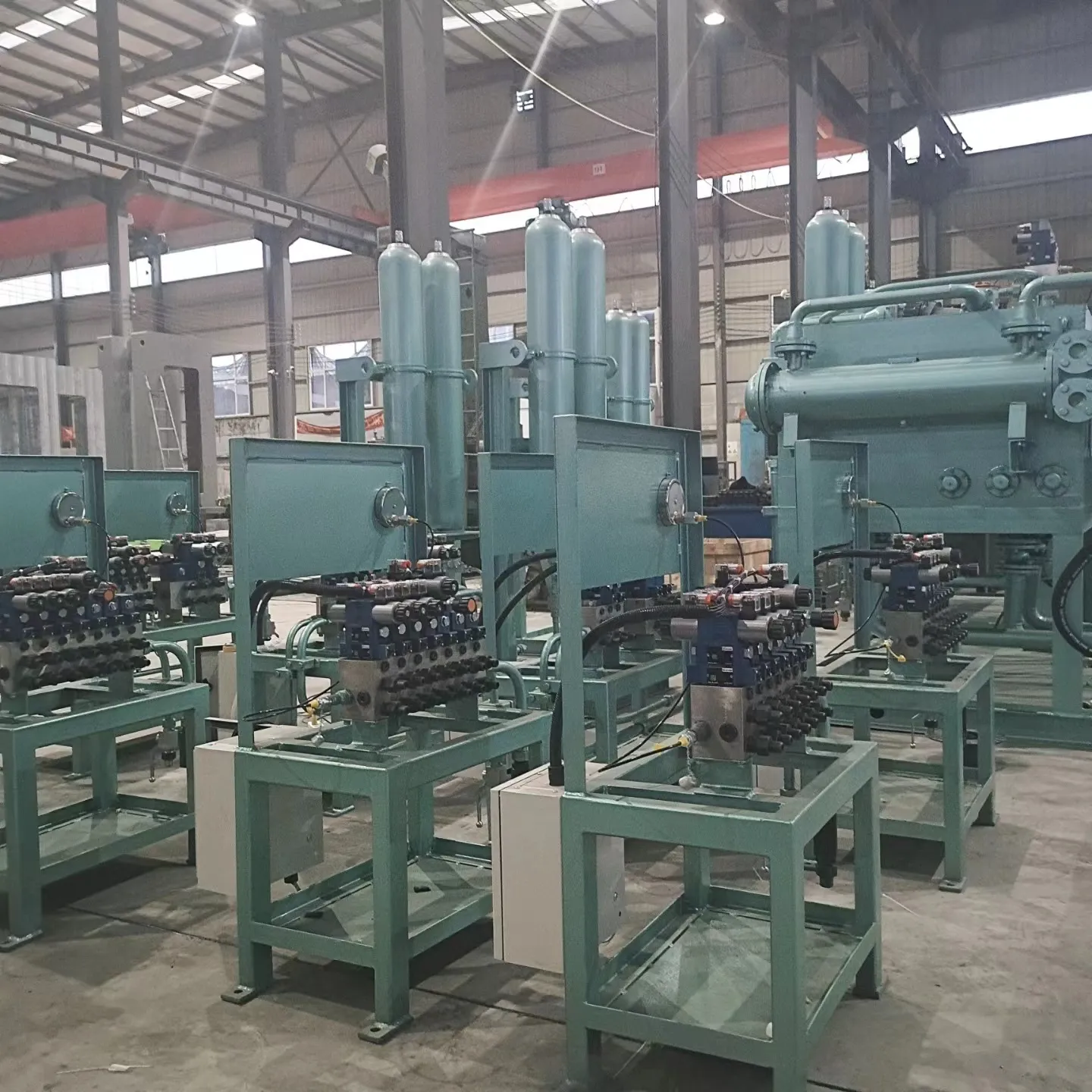
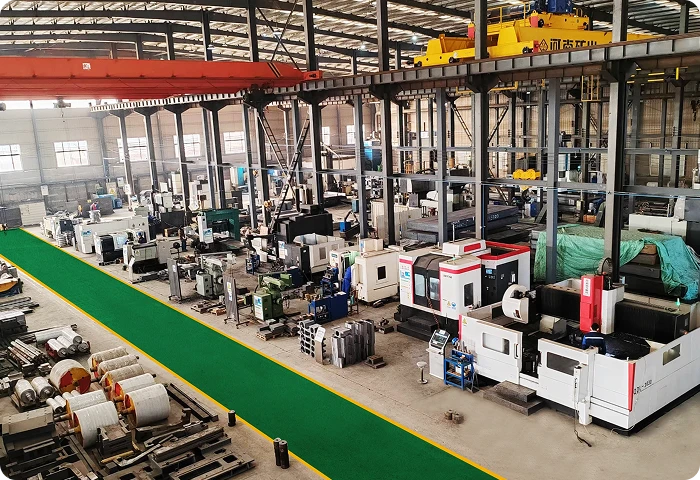
Yang Wang Li Xin operates a state-of-the-art facility over 66,000 square meters,and our manufacturing facility is fully equipped with high-tech machinery and high-capacity cranes. This enables us to handle large work pieces measuring 4.5m in width, 10m in length, and 1.5m in height, guaranteeing our capacity to produce 1800mm skin-pass mills and 1450mm rolling mills. The individual piece can weigh up to 100 tons.

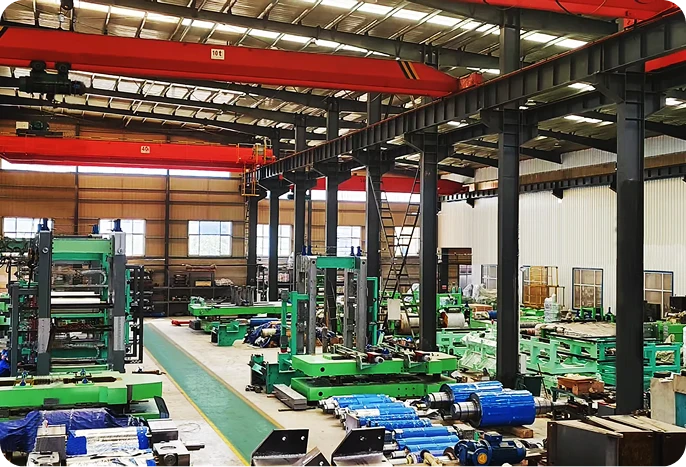

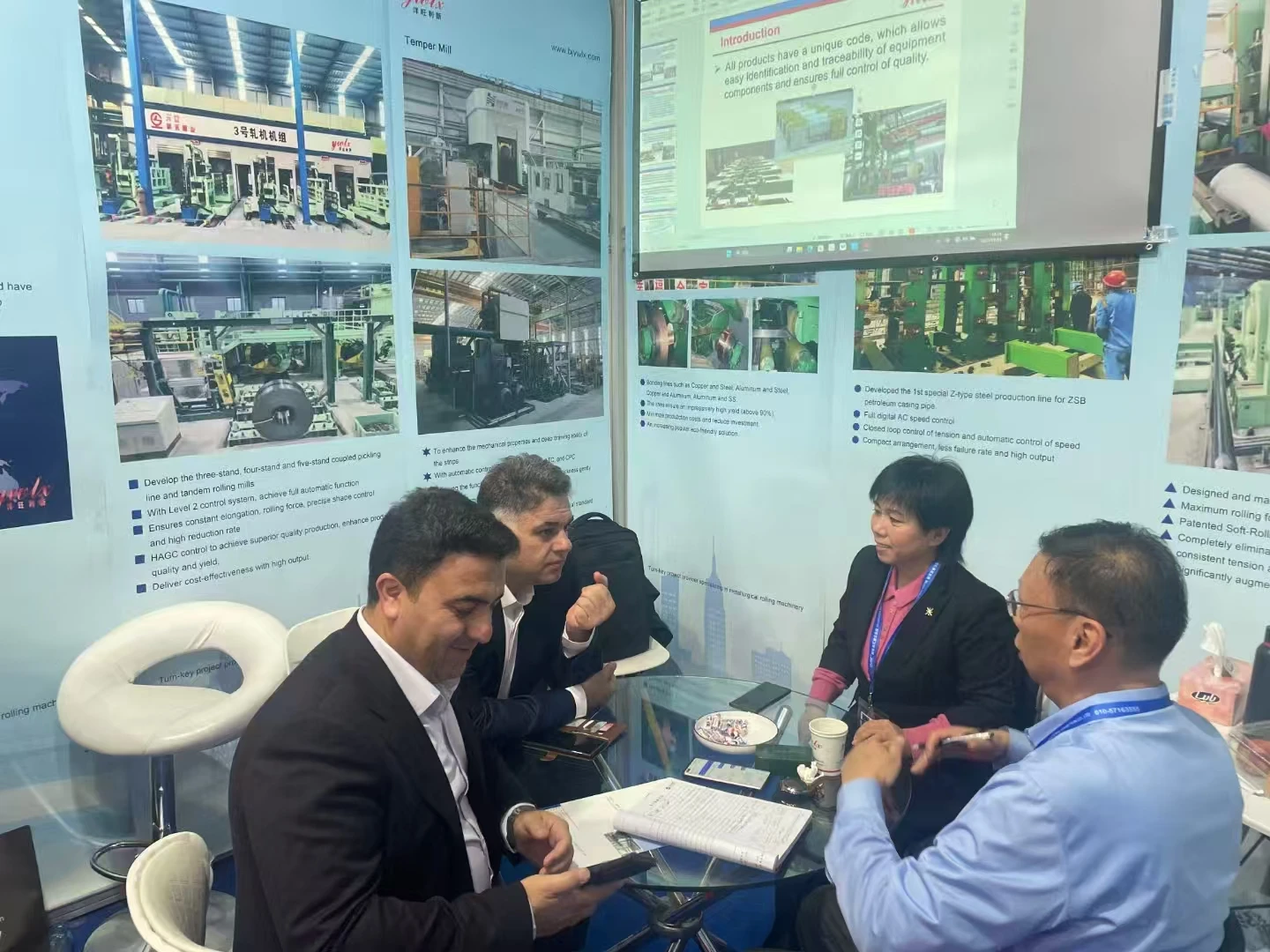
Quality is fundamental to the enterprise survival. We have established a comprehensive and meticulous quality management system and have successfully obtained ISO14000 certification. Starting from the design source, it supervises the entire production cycle, including design, procurement, processing, assembly, in-factory testing, installation, and online commissioning. The workshop is equipped with measuring tools like vernier calipers, spectrometers, hardness testers, and ultrasonic flaw detectors. They are used to check materials and control tolerances to ensure the final equipment meets or exceeds requirements. All products have a unique code, This enables the easy identification and traceability of the equipment components and ensures full control of quality.


-
 鋼板圧延機In the world of industrial manufacturing, the steel plate rolling mill stands as a cornerstone of technological advancement and production efficiency. Known for transforming raw steel into usable sheets, this essential piece of equipment significantly impacts industries ranging from construction to automotive manufacturing. Drawing on years of technical expertise, this article delves into the uniq
 -
 High-Efficiency Water Cooling System for Water TanksIn the vast landscape of industrial operations, maintaining optimal temperatures for critical equipment and processes is paramount. The integrity, efficiency, and longevity of machinery heavily depend on effective thermal management. Among the most crucial solutions for this challenge is the water cooling system for water tank , a sophisticated infrastructure designed to regulate temperatures by c
 -
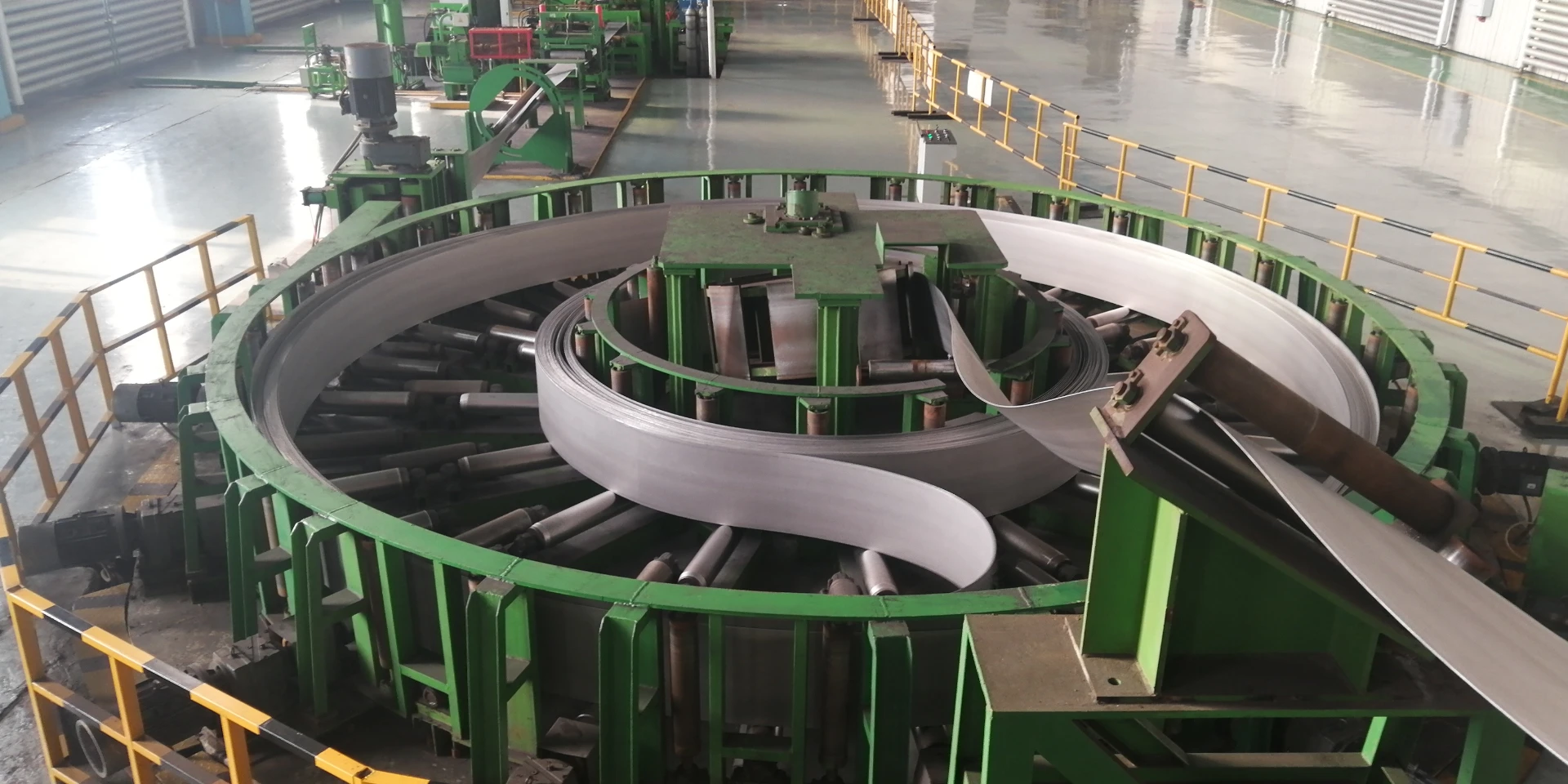 rolling millsUnderstanding Rolling Mills A Key Element in Metal Production Rolling mills are crucial machines in the metalworking industry, primarily used for reducing the thickness of metal sheets, plates, and strips. These machines apply significant pressure to the metal, causing it to elongate and thin down, which can improve its properties and prepare it for various applications. This article delves into t


